 Image 1 of 3
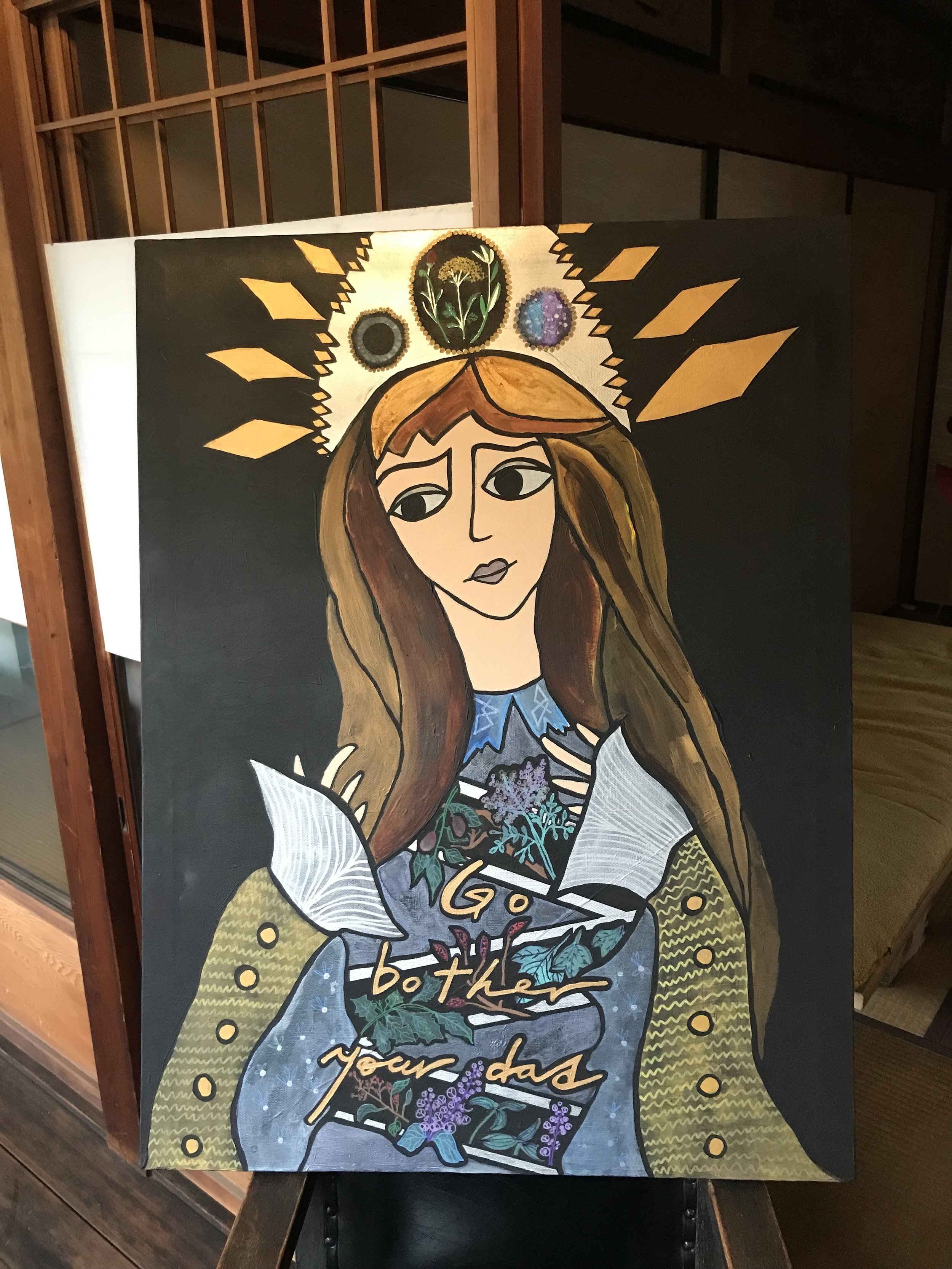 Image 2 of 3
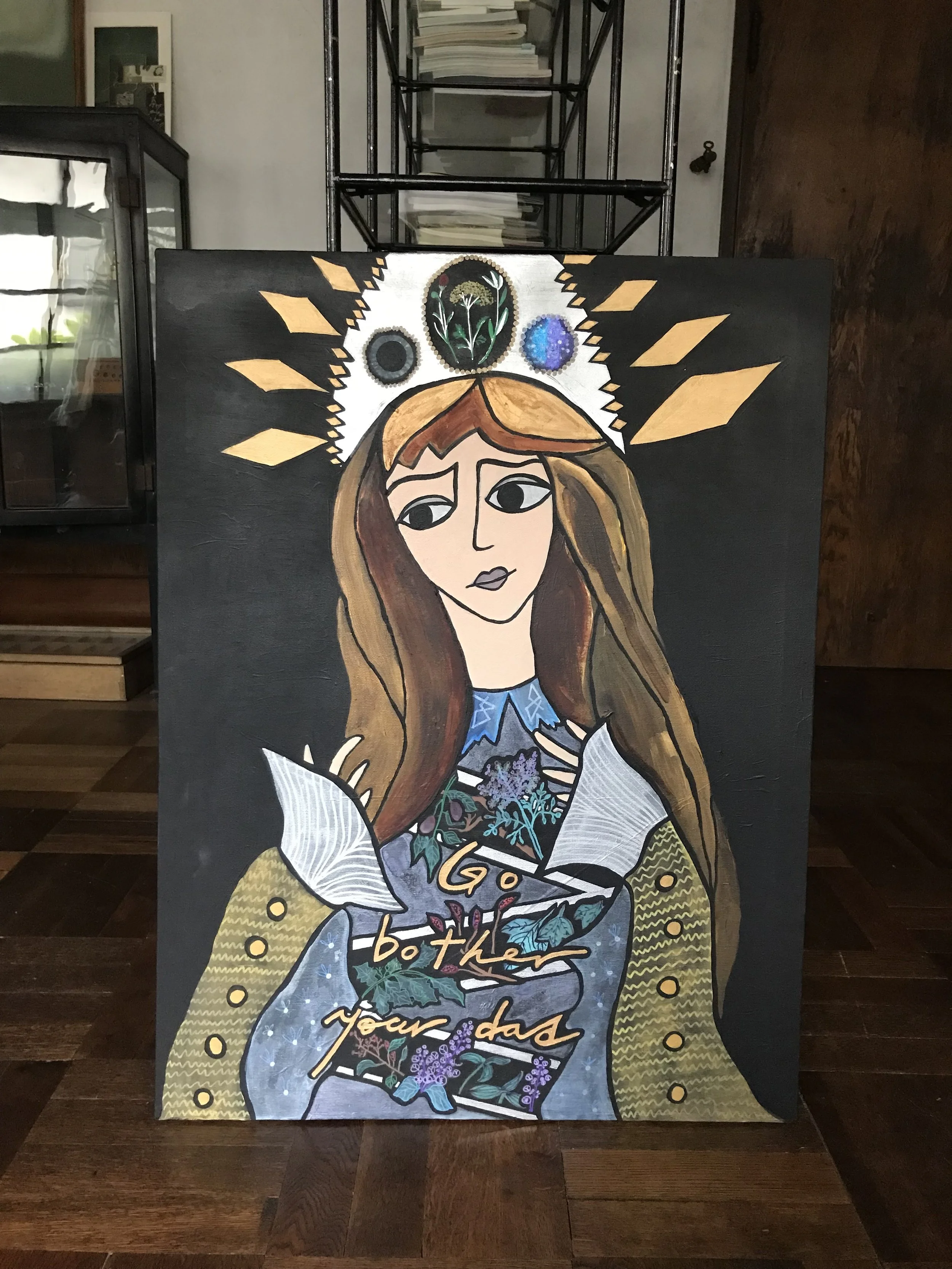 Image 3 of 3
2025.2
59 x 74 x 2 cm
Oil/ acrylic/ ink/ pastel on canvas
In the Maria series, Lin reimagines Maria as a figure who embodies deity, human, mother, wife, and daughter—an archetype of the collective feminine. Drawing inspiration from Our Lady of Sorrows, this work portrays a Maria who transcends grief through self-healing. Her garments are adorned with plants, flowers, stars, and energetic symbols, while the concealed cross beneath her crown signifies liberation from rigid religious dogma and a deeper attunement to Earth, Gaia, and cosmic consciousness. Engaging with East Asia’s strict maternal expectations and the invisibility of fathers, Lin critiques patriarchy and envisions women sharing burdens historically imposed upon them with men.
「マリアシリーズ」において、林はマリアを、女神・人間・母・妻・娘という複数の側面を同時に宿す存在として再構成し、「集合的女性性」の原型として提示している。本作は宗教絵画《悲しみの聖母》に着想を得ながらも、自己癒しを通して悲嘆を超えていくマリアの姿を描いている。
彼女の衣装には植物や花、星々、そしてエネルギーを象徴する記号が散りばめられ、冠の下に隠された十字架は、硬直した宗教的教義からの解放と、大地やガイア、そして宇宙的意識とのより深い結びつきを象徴している。
東アジアにおける厳格な母性規範と、父性の不可視性という問題に応答することで、林は家父長制を批評し、女性が歴史的に背負わされてきた負荷を男性と分かち合う未来像を提示している。
2025.2
59 x 74 x 2 cm
Oil/ acrylic/ ink/ pastel on canvas
In the Maria series, Lin reimagines Maria as a figure who embodies deity, human, mother, wife, and daughter—an archetype of the collective feminine. Drawing inspiration from Our Lady of Sorrows, this work portrays a Maria who transcends grief through self-healing. Her garments are adorned with plants, flowers, stars, and energetic symbols, while the concealed cross beneath her crown signifies liberation from rigid religious dogma and a deeper attunement to Earth, Gaia, and cosmic consciousness. Engaging with East Asia’s strict maternal expectations and the invisibility of fathers, Lin critiques patriarchy and envisions women sharing burdens historically imposed upon them with men.
「マリアシリーズ」において、林はマリアを、女神・人間・母・妻・娘という複数の側面を同時に宿す存在として再構成し、「集合的女性性」の原型として提示している。本作は宗教絵画《悲しみの聖母》に着想を得ながらも、自己癒しを通して悲嘆を超えていくマリアの姿を描いている。
彼女の衣装には植物や花、星々、そしてエネルギーを象徴する記号が散りばめられ、冠の下に隠された十字架は、硬直した宗教的教義からの解放と、大地やガイア、そして宇宙的意識とのより深い結びつきを象徴している。
東アジアにおける厳格な母性規範と、父性の不可視性という問題に応答することで、林は家父長制を批評し、女性が歴史的に背負わされてきた負荷を男性と分かち合う未来像を提示している。